
Why the Richest Company in the World Had to Go Nuclear

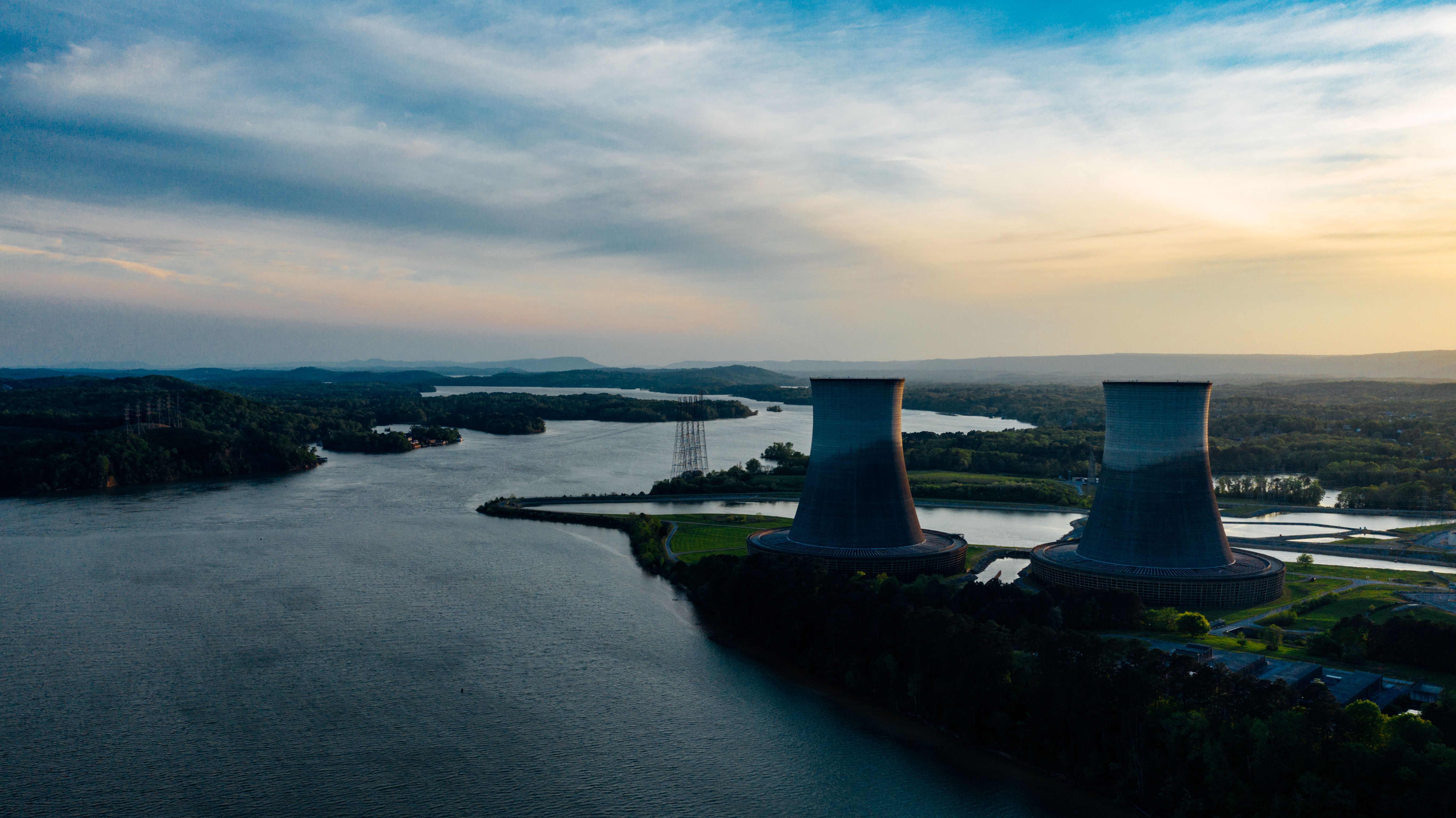
Capital is still abundant. The things it needs aren't.
In September 2024, Microsoft announced it would pay to restart a nuclear power plant.
The plant was Three Mile Island Unit 1, in Middletown, Pennsylvania. Not the reactor that partially melted down in 1979, but its companion unit, which had run safely for decades before closing in 2019, when it could no longer compete economically with cheap natural gas. Constellation Energy agreed to bring it back online under a twenty-year power purchase agreement, committing roughly $1.6 billion to refurbish and reopen the shuttered reactor.
Microsoft did not do this because nuclear power was the cheapest option. It did it because it needed electricity in large, reliable quantities at a predictable price, and the existing grid could not provide what its expanding data centers require. In the same period, Amazon acquired a campus in Pennsylvania built adjacent to a nuclear plant, seeking to draw power directly from it. Federal regulators subsequently rejected an expanded version of that arrangement, citing concerns about grid reliability and how the costs of serving large private loads would be distributed across the broader system. Google announced agreements to purchase power from advanced reactors still under development. These were not bets on the future of nuclear power as an industry. They were the solutions of companies with essentially unlimited access to capital discovering that capital was not their constraint.
Their constraint was electrons.
This matters beyond the energy industry. What these deals reveal is the shape of an economy in which the most important limits are increasingly physical, operational, and structural. Money, however abundant, cannot immediately dissolve them.
The Long Blur
The relationship between finance and real value has never been stable for long. In the 1920s, investment trusts and holding companies stacked ownership on ownership until the distance between the stock certificate and the factory floor grew nearly philosophical. When markets collapsed in 1929, investors discovered their paper claims were more fragile than the businesses beneath them.
After the Second World War, the connection tightened. General Motors wasn't merely a stock. It employed hundreds of thousands of people, consumed steel and rubber at industrial scale, and moved goods across a continent of highways it had helped make necessary. A share of GM was a share in all of that.
By the 1980s, Wall Street had developed a more interesting theory: the financial claims could be restructured profitably even when the underlying businesses didn't improve. Leveraged buyouts and recapitalizations generated returns through engineering rather than operational progress. Some of those deals fixed genuinely bloated companies. Many proved only that financial sophistication could produce returns for a while, in the right conditions, without producing anything more useful.
The dot-com era extended the principle and complicated it. A website, rising user numbers, and a compelling story about future dominance could attract capital at scales disconnected from current revenue. Most dot-coms eventually embarrassed their backers. A few of them, Google and Amazon and Salesforce among them, turned out to be among the most durable and profitable businesses in history, each requiring years of patient capital before their underlying economics became legible.
That complication was consequential. The lesson investors drew from the survivors was not "real businesses only." It was: the right story, about the right business, is worth almost anything.
For a decade after the 2008 financial crisis, the Federal Reserve held short-term rates near zero. Capital chased yield wherever yield could be found. Venture funding expanded dramatically. Commercial real estate valuations rose as cap rates compressed. The period produced genuine things: cloud infrastructure, logistics networks, mobile platforms, medical devices. It also made it genuinely difficult to distinguish a business that would eventually create durable value from one that merely required continuous cheap capital to appear sound.
The Reckoning

In early 2022, the Federal Reserve began raising rates at the fastest pace in four decades. By the summer of 2023, its benchmark had climbed from near zero to 5.25 percent. For businesses whose valuations had been built on the assumption that cheap capital was a permanent feature of the landscape, the adjustment was not gradual.
Office buildings in major cities, already losing tenants to remote work, faced refinancing at costs their leases could not absorb. Real estate development that worked at 4 percent construction financing became unviable at 7. Startup funding contracted sharply as investors demanded profitability rather than growth. Leveraged acquisitions became harder to finance and much harder to exit.
What emerged was not a new category of problem. It was the existing problems, no longer deferred.
WeWork filed for bankruptcy in November 2023. The company had not failed because shared offices were a bad idea. The demand is real, the economics can work, and the concept survives in other hands. WeWork failed because a story about transforming real estate, delivered with extraordinary charisma and backed by more than ten billion dollars from SoftBank across multiple rounds, had driven expansion at a scale the underlying unit economics could not sustain. The company matched long-term lease obligations against short-term customer commitments, a structure that required cheap credit, low vacancy, and a continuous supply of new capital to hold together. When any of those conditions shifted, the gap between WeWork's claimed value and its actual value closed with uncomfortable speed.
The story ran out before the business caught up.
That sequence was not unique to WeWork. Across commercial real estate, private equity, development, and venture capital, the period of near-zero rates had enabled a useful and sometimes dangerous confusion: between businesses that would eventually produce durable value and businesses that required an endless subsidy from cheap capital and optimistic future buyers to look like they were doing so.
The Genuine Difficulty
This is where a certain kind of essay would conclude that the lesson is to favor tangible assets, established cash flows, and conservative assumptions. That conclusion is too easy and, on the evidence, wrong.
Amazon was not a sound business by conventional standards in 2001. It was burning cash, its margins were poor, and its model was routinely dismissed. What it was building was fulfillment infrastructure at a scale and cost that would eventually lower the price of commerce for hundreds of millions of people. The infrastructure was real: warehouses, servers, distribution systems. But its value required patient capital and years of reported losses to become visible.
Moderna had almost no revenue when it received the government funding and private investment that allowed it to develop mRNA manufacturing at the scale needed for a COVID-19 vaccine. The underlying science was uncertain, the commercial market undefined, the timeline indefinite. The capital was not foolish. It was patient in a way that produced something real.
Stripe is software with no physical presence to speak of. It required venture capital and years of investment before it processed enough volume to be obviously valuable. What made it durable was not tangibility but the practical stickiness of its relationships: once a company builds payment infrastructure on Stripe, the cost of migration is high enough that the relationship is, in practice, permanent.
The relevant distinction is not tangible versus intangible, conservative versus speculative, or industrial versus technological. It is whether a business creates value that is durable independent of the conditions that financed its creation.
A data center with contracted demand, long-term tenants, and a secured power supply has value that survives whether rates sit at 1 percent or 6. A shared-office company matching long-term leases against short-term customers has value that depends on conditions that can reverse. A manufacturer with process knowledge, embedded customer relationships, and a trained workforce has value that is genuinely hard to displace. One assembled through acquisitions, weighted with debt, and serving customers who could switch suppliers with sufficient motivation has value contingent on a long chain of things not going wrong.
The question is not what the business looks like. It is what it would be worth if the favorable assumptions were removed.
What the Grid Is Telling Us

Return to the data center developers.
When Microsoft announced the Three Mile Island agreement, it was solving a problem that its capital advantages had not prepared it to solve quickly: it needed power that the grid could not promptly deliver. PJM Interconnection, the regional grid operator serving much of the eastern United States, manages a queue of more than 800 generation projects seeking to connect to the transmission system, a backlog that reflects how fully committed the region's infrastructure already is. Data centers face a related but distinct constraint on the demand side: securing power at a specific location often requires transmission and substation upgrades that move at regulatory and engineering speed, not at deal speed. Developers with land, equity, and signed tenant commitments are waiting for those upgrades. No financial engineering shortens those timelines.
The constraints are physical and regulatory. Substations must be upgraded. Transmission lines must be permitted and built. Studies must be completed in sequence. These timelines operate at engineering speed. Capital can fund them but cannot compress them beyond a certain point.
That logic extends to economic activity that has nothing to do with the AI build-out.
A manufacturing business is not an EBITDA multiple. It is a specific plant, a workforce with particular skills, supplier relationships built over years, and customers whose procurement decisions are embedded in engineering specifications. When that business changes hands, those relationships either survive or they do not. The financial model can show attractive returns. The operational reality can be considerably more fragile in ways that a transaction process is not designed to surface.
A medical building is not its cap rate. It is a location that either generates the referral patterns needed to sustain its tenants or does not. The income looks stable until a physician group departs, a competing facility opens nearby, or a referral relationship that was never contractual simply stops. Those risks do not appear clearly in a rent roll.
For most of the past decade, the gap between financial appearance and operational reality could be financed across. Time was on the side of the asset because money was cheap enough to buy time. That relationship has not reversed permanently, but it has been substantially suspended. The gap has to be evaluated honestly now, because the latitude to finance the uncertainty away has narrowed.
The Work the New Era Rewards

The more interesting implication of this moment is not which assets are "real" and which are not. That debate produces more heat than light. The more interesting question is what kind of capability the new environment differentially rewards.
Consider what actually confronts buyers and lenders right now. A corporation divesting a division with solid customers, genuine expertise, and a capable team that has never operated as a standalone company. It has no independent financial history that a lender can underwrite, no treasury function appropriate for a company that must manage its own working capital, a cost structure built on corporate services that will not exist after the sale. The business is real. The opportunity is real. But the work required to make it financeable has to happen first: the reporting built out, the standalone capital structure defined, the separation addressed. In an easy capital environment, a buyer could acquire the division and figure out those gaps in real time. At today's cost of capital, that approach is less available.
Or consider a development site in a market where demand is genuinely there, with population growing and employers present and a shortage documented, but where the infrastructure investment, phasing, and pre-leasing required to satisfy a construction lender have not been assembled. The opportunity is not bad. It is incomplete. Moving it from incomplete to executable requires work that is different in kind from modeling a stabilized cash flow.
The advantage in this environment does not belong to whoever identifies the most obviously safe opportunities. There are few of those, and they are priced accordingly. It belongs to whoever can look at situations that are incomplete rather than bad, understand precisely what is there versus what is missing, and do the operational, structural, and financial work that moves an opportunity from unfinanceable to executable.
That capability was always valuable. What has changed is how differentiating it is. When capital was cheap, a range of analytical errors and structural gaps could be funded across. When capital is not, the gaps have to be closed.
Foundation
The data centers will eventually get their power. Grid capacity will expand. The infrastructure the AI build-out demands will be constructed, in the places where the physical requirements can actually be met, on timelines that engineering and regulation permit.
What the Three Mile Island deal reveals, and what the interconnection queues confirm, is that the most capital-rich enterprises in the world have reached a constraint that money cannot immediately resolve. That is not a failure of markets. It is a description of how economies actually work, surfaced by conditions that had obscured it for an unusually long time.
Finance at its best puts capital to work in advance of proof. It allows a manufacturer to buy equipment before every order is in hand, a developer to build before a tenant moves in, a company to invest ahead of demand. That capability is real and has produced many of the most consequential businesses of the past generation.
But finance cannot create what it funds.
It cannot build the grid faster than engineering allows. It cannot generate customers who do not exist. It cannot install management that is not there. It cannot make a business that works only under favorable conditions into one that works under ordinary ones.
The businesses that hold value in the next cycle will be the ones whose value survives the removal of favorable assumptions: real customers, present infrastructure, capable management, a capital structure that can absorb a difficult year without requiring rescue.
That is not pessimism about what capital can accomplish. It is clarity about what it cannot.
The grid doesn't read the pro forma.
Daniel Sexton is Managing Partner of Vanguard Industrial Partners and founder of Arkvera. He works on the deals and developments where capital alone isn't enough.