
Charleston Voted to Spend $400 Million on a Deal It's Never Been Allowed to Read.

Somewhere in Charleston there is a contract to sell the city's waterfront.
The mayor has never read it.
Neither has the city council, which voted to redirect thirty years of the property's tax growth to it. Neither has the school district or the county, whose money that is.
The full terms remain confined to the parties and anyone they have chosen to brief. The contract was signed in March 2024.
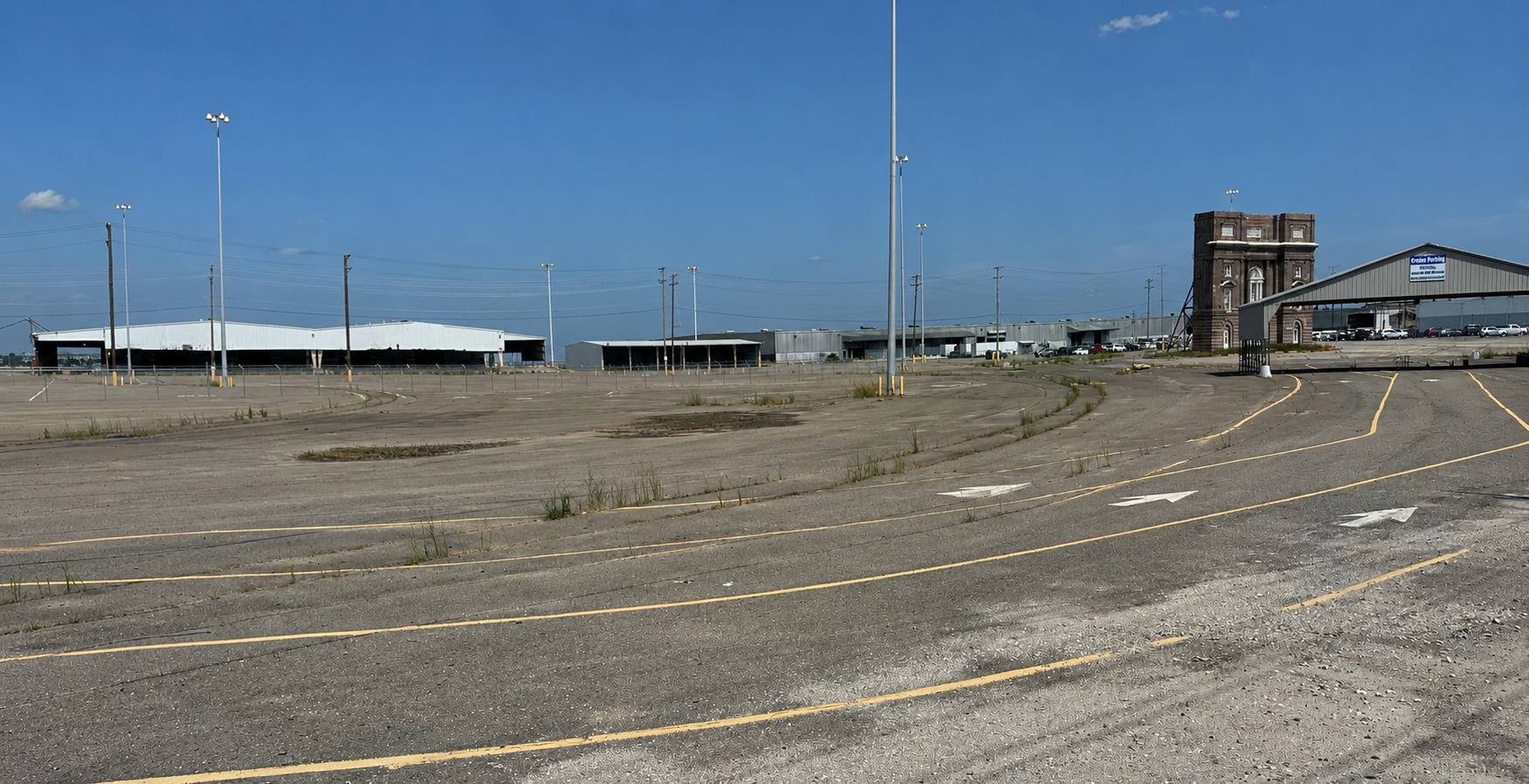
The contract covers roughly sixty-five acres along the Cooper River, the piece of downtown Charleston known as Union Pier. The seller is a state agency, the South Carolina State Ports Authority. The buyer is a company owned by Ben Navarro, the local billionaire, who agreed to pay $250 million.
Two years later, the sale still has not closed. It is expected to close in 2027.
What Charleston knows about its own waterfront is the price, the buyer, and a set of intentions.
The officials who approved the sale had been warned. The warning came five years ago, before Navarro's name was attached to the property at all.
In October 2020, the Ports Authority went to a small state board called the Fiscal Accountability Authority to approve a future sale of Union Pier, then tied to a redevelopment arrangement with a Los Angeles firm called Lowe Enterprises.
Five people sat on the board: the governor, the treasurer, the comptroller general, and the chairmen of the legislature's two budget committees. Three held statewide office. The other two answered to voters in districts centered on Florence and Sumter.
None was a Charleston-area legislator or local official.
One of the five, Comptroller General Richard Eckstrom, told the board Union Pier was a unique project, unlike anything that had come before it. So he asked for something specific: the annual updates and quarterly reports already written into the developer's agreement, sent to the state, so it could track the project and step in if it went wrong. The reports did not have to be invented. He was asking only that the state receive its copies.
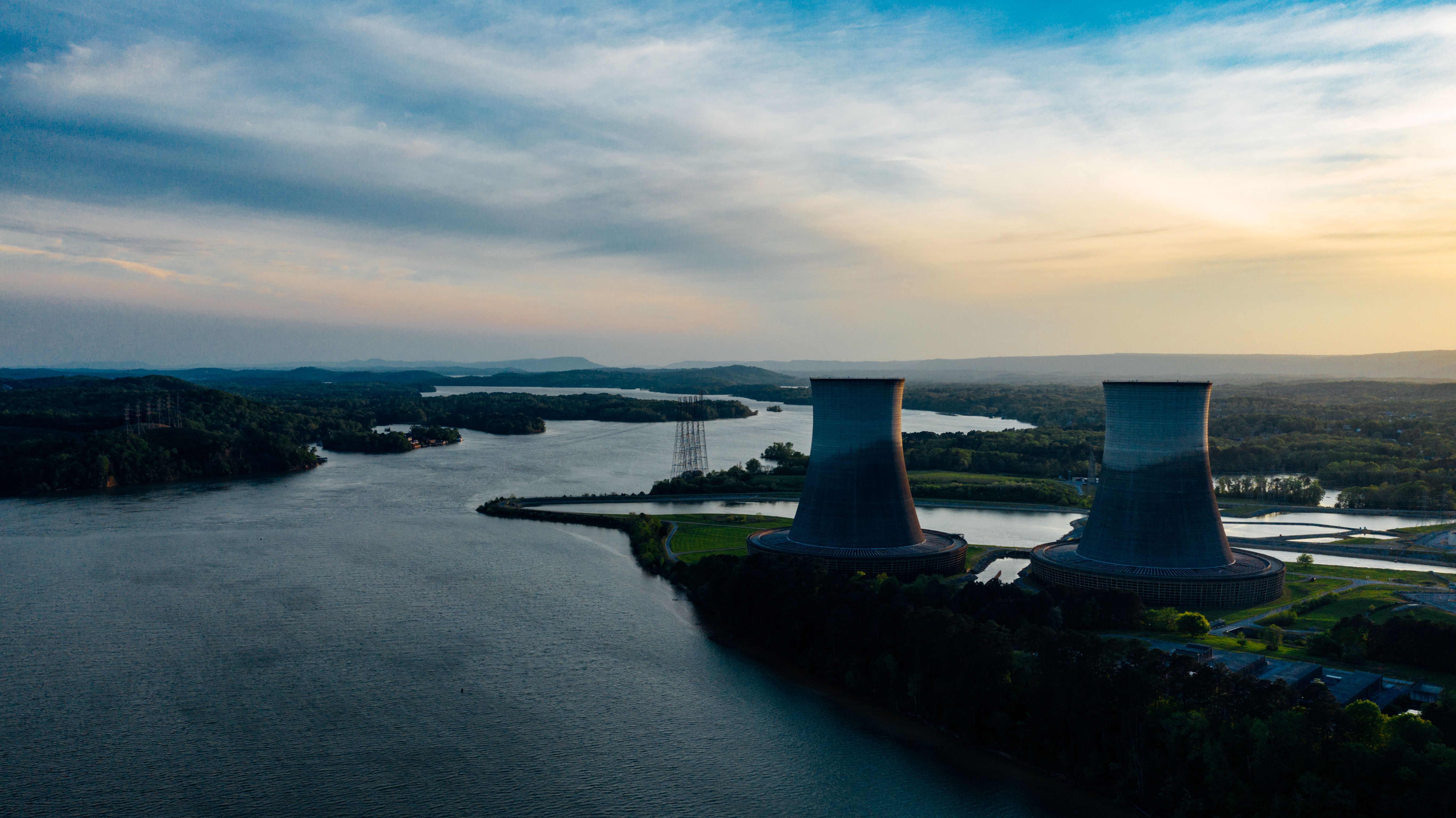
He raised the ghost of V.C. Summer, the abandoned nuclear project that had already cost South Carolinians billions of dollars and taught them what a state's assurances are worth.
Senator Hugh Leatherman told him there was no comparison to V.C. Summer. Union Pier, he said, was a good deal for the state, and the project should move forward. Any follow-up on the reports, he suggested, could go to the members' staffs.
Eckstrom said he wanted the information sent to him, not his staff. He was voting for a project unlike any the board had considered, he said, and he bore personal responsibility for what happened next. He would read the reports himself.
Then he softened it. He was asking as a professional courtesy, he said, not a demand. He voted for the sale. So did everyone else in the room except the treasurer, who abstained.
The approval came with two written conditions: every parcel had to fetch at least fair market value, and nothing below the mean high-water mark could be transferred. The reporting Eckstrom asked for was not among them. It was, after all, a courtesy.
That is how the only oversight proposed during the board's public discussion ended. Not denied. Requested, softened into a favor, and never written down. The man who asked for it voted yes anyway.
The Lowe arrangement did not survive contact with the public. When Charleston residents finally saw the redevelopment plan, and, belatedly, the terms of the arrangement itself, the opposition at a June 2023 public meeting was loud enough and organized enough that the Ports Authority ended the relationship. Unwinding it cost the agency $9.9 million.
Lowe taught the Ports Authority a lesson: a crowd can kill a plan, but only if there's a plan to kill. The next deal would not give them one.
What Charleston got instead was the appearance of one. Advisory groups were convened. Community sessions were held. A framework was drafted. The new mayor, William Cogswell, wrote to the Ports Authority laying out what the city expected: public access to the water, lower density, lower heights, significant green space, a meaningful affordability component, and a local buyer.
He got the local buyer.
In March 2024, the agency's board unanimously approved the sale to Marti Holdings LLC, an affiliate of Beemok Capital, Navarro's family office. The price, $250 million, sat well below the $350 million to $400 million range a 2023 city planning presentation had put on the property before it went to market. The two figures are not perfectly comparable. The earlier estimate predated the deed dispute with Norfolk Southern. But nobody has published the arithmetic that closes a hundred-million-dollar gap, and the contract that could settle the question is one of the things Charleston is not allowed to read.
Charleston's affection for Navarro is real, and it was earned. He financed a major renovation of the tennis stadium. He founded Meeting Street Schools and a scholarship fund that has awarded scholarships to roughly 1,500 students. He renovated Charleston Place. The fortune behind the philanthropy came from Sherman Financial Group, one of the largest buyers of defaulted consumer debt in the country, built on the precise, patient, contractual pursuit of money owed by ordinary people who had very little of it. None of this is a secret, and none of it is spin. Both halves of the record are real.
And the record is doing real work in this transaction. It is standing in for the terms.
Navarro's own op-eds supplied the language. He wanted to be a long-term steward. He would always have the interests of Charleston residents in mind. He would have the humility to be a good listener. The Ports Authority's chairman said Navarro wanted to hear from the citizens of Charleston and would do right by them, and that this was why the agency made the deal.
That is the seller of a public asset explaining that the safeguard on the transaction is the buyer's character.
The public money moved on the same faith. In November 2024, Charleston City Council approved a tax increment financing district covering the site, capturing the property's tax growth for thirty years to fund roughly $400 million in infrastructure. Union Pier currently sits off the tax rolls entirely. It is state-owned port property. So the growth being captured is not a slice carved out of existing revenue. For the next thirty years, it is close to the only tax revenue the property will produce for anyone. The county's price for joining was a set of parking spaces. The school district's price was a floor of an office building it already occupied, freed from the rent it had been paying the city. Both got something certain, upfront, in exchange for a share of something speculative and thirty years away. The Post and Courier's editorial board noted that the TIF itself had been pitched in private meetings carefully sized to stay below the quorum that would trigger South Carolina's open meetings law.
Five hundred miles away, Nashville made a version of this bet with Oracle, and at least tied its money to a number: jobs, salaries, a clawback. The number turned out to be softer than it looked. But when the project fell behind, it was the number that said so. Charleston tied its money to language. Green space, access, resilience, affordability. These are descriptions, and descriptions are flexible in a way that numbers, even soft ones, are not.
Then there is the matter of the fourteen acres.
In 1957, Southern Railway gave the state seven parcels that now sit inside Union Pier, with a condition written into the deed: the land was to be used for exclusively public purposes, permanently. Norfolk Southern, the railroad's successor after decades of mergers, argued the condition still rode with the land, and that it still held the right to enforce it. So when the Ports Authority decided to sell, the railroad named its price for releasing the restriction: $36 million.
The state's attorney general disagreed, opining that the deed language likely didn't bar a sale, though the legislature would still need to sign off. The Ports Authority went further in court, arguing the restriction had only ever been tied to old tax benefits and was no longer enforceable, and that it held full rights to the land through eminent domain. Norfolk Southern's lawyers called that legally meaningless, and produced something better than an argument: a document from 2014, signed and recorded by the Ports Authority itself, affirming that the restriction remained in full effect. The agency was now telling a court the restriction didn't bind it. Its own signature, recorded eleven years earlier, said it did.
The Ports Authority sued Norfolk Southern in July 2025 to settle the question in court. The case never got that far. On January 13, 2026, it was dismissed. The two sides had settled it themselves, privately, after six months of talks with no hearings. Those terms are confidential too.
So the phrase "exclusively public purposes" ended its seventy-year life as a private line item, resolved between a state agency and a railroad for an undisclosed amount, on the way to a private sale whose terms are also undisclosed. The words meant something. What they were worth is a secret.
By now, this has become a story about missing documents. There are four. The purchase agreement, sealed until closing, sometime in 2027. The Norfolk Southern settlement. The 2014 document in which the agency reaffirmed the very restriction it later argued was unenforceable. And a fourth thing, subtler than the rest: any record of the state board ever revisiting its 2020 approval once the buyer changed. A review of the Fiscal Accountability Authority's published 2024 meeting minutes found no agenda item, no vote, and no mention of Union Pier, the Ports Authority, Marti Holdings, or Navarro.
None of these absences is illegal, as far as the record shows. Each has a procedural explanation. Together they describe a transaction in which every consequential term sits behind a door. What the public holds instead is a man's reputation and a genuinely lovely set of intentions.
The law has been present at every stage of this transaction, and it has worked at every stage for someone. It has simply been working on the other side of the door.
On June 30, the Norwegian Jewel pulled away from Union Pier, the last cruise ship the terminal will ever host. The cruise terminal is quiet now, though the warehouses and open storage acreage remain licensed out while the deal sits under contract. Beemok's team has counted the intersections per square mile in Charleston's historic neighborhoods to get the street grid right. They have analyzed the watersheds. They have commissioned a hardbound history of the site. They have said, in Navarro's words, that they don't do master plans, that the work will be bespoke, building by building, and that when it is finished no one should be able to tell where Union Pier was.
In April 2025, fourteen months before the Jewel's final call, the City Council had adopted its own language for the site, the closest thing to an official commitment that exists on paper. It calls for a mix of housing types for residents of diverse incomes and continuous public access along the waterfront, and it describes future buildings only as needing heights and densities "compatible to the neighboring commercial and residential districts." No acreage. No unit count. No percentage. No number of stories. The document reads like Navarro's op-eds translated into zoning language, which is to say it is a description doing the work a number should do.
Score the letter Cogswell sent in January 2024 against what exists today. He asked for six things: public access to the water, lower density, lower heights, significant green space, a meaningful affordability component, and a local buyer. Charleston got the buyer. It got the empty cruise terminal too, another item from the same letter that never made the six-item tally. The other five, access, density, height, green space, affordability, remain exactly what they were the day he asked for them. Adjectives, not numbers.
It is a beautiful ambition, and it may all come true. But a master plan can be measured, amended, and fought over in a public meeting by several hundred angry people, which is, as it happens, the only oversight that has ever worked on this land. A steward can only be trusted.
Charleston has decided to trust.
Notes and Sources
Deal terms and timeline. South Carolina Ports Authority describes Union Pier as under contract to Marti Holdings LLC, with closing expected in 2027. Additional detail on price, structure, and timeline from the Post and Courier's ongoing coverage of the sale, 2023–2026.
The 2020 state board meeting. South Carolina Fiscal Accountability Authority, official minutes, October 13, 2020.
Termination of the Lowe Enterprises agreement. SC Ports Authority audited financial statements, FY2024; Post and Courier reporting on the $9.9 million termination cost.
Mayor Cogswell's letter to the Ports Authority. Reported by the Post and Courier and WCBD News 2, February 2024.
The Union Pier Tax Increment Financing district. Public votes by Charleston City Council, Charleston County Council, and the Charleston County School District, October–November 2024; TIF notice documents filed with the school district; Post and Courier editorial on the private, sub-quorum meetings used to pitch the district, July 2024.
The 1957 deed and the Norfolk Southern dispute. South Carolina Attorney General's opinion on the deed language; Post and Courier and WIS-TV reporting on the Ports Authority's 2025 lawsuit and its January 2026 settlement.
The April 2025 Comprehensive Plan amendment. Full adopted language reproduced by the Historic Charleston Foundation; Charleston City Council meeting records.
The final cruise call. Reporting from the SC Daily Gazette, Charleston City Paper, and Live 5 News on the Norwegian Jewel's June 30, 2026 departure.
Navarro's public statements and business background. Navarro's March 2024 essay published on unionpiersc.com; Post and Courier profile reporting.