
How Quaker Oats Destroyed Snapple in Three Years

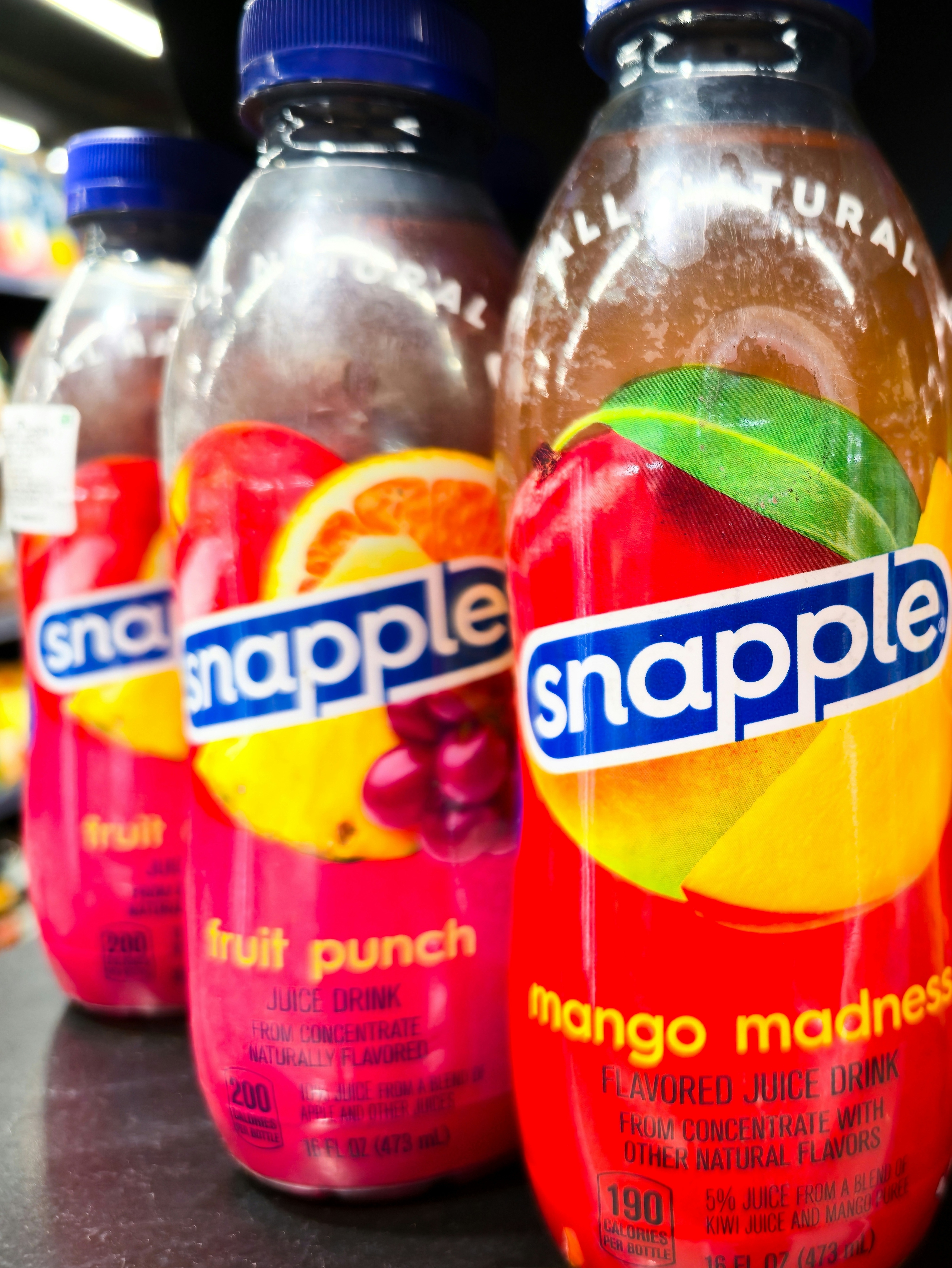
Before Snapple was a national brand, it was a bottle in a deli cooler.
It moved through lunch counters, newsstands, street vendors, hotels, and bodegas, places too small and too numerous for a conventional distribution strategy to reach efficiently. The people who moved it were independent distributors, more than three hundred of them, each working an exclusive territory they had spent years cultivating. They knew which deli on which block would take a new flavor. They knew which accounts paid on time and which ones needed a visit. They loaded their own trucks, called on their own customers, and built their own margins: roughly four dollars a case on Snapple, earned by doing the kind of local, relationship-dependent selling that a national company could not easily replicate or replace.
By the time Quaker Oats acquired Snapple Beverage Corp. in December 1994, those distributors had built something worth $1.7 billion. What Quaker's purchase agreement transferred, and what it did not, would take about twenty-nine months to discover.
Quaker was not buying blindly. The company had spent the previous decade turning Gatorade into a billion-dollar brand, and it understood distribution at a level most food companies did not. It knew that Snapple operated differently. Ken Robb, Quaker's director of customer development, said so plainly in the trade press just three months after the acquisition closed: the two businesses were "two very strong franchises that have been effectively marketed in two completely different go-to-market ways." Gatorade had built its business through wholesalers who moved product into supermarket warehouses. Snapple had always been a direct store delivery product. Robb described Snapple's ability to reach street vendors, newsstands, hotels, and restaurants as "a distribution channel that is virtually unmatched."
The plan, Robb said, was to study how to integrate them.
There was also recent evidence that the integration would be harder than it looked. Shortly before the Snapple acquisition closed, Quaker had ended a year-long test of direct store delivery for Gatorade in Florida, a deliberate experiment to expand the sports drink into the cold channel through two DSD distribution partners. The test was shut down quietly. Quaker went back to its wholesalers. The decision, Quaker said at the time, had nothing to do with Snapple.
It had everything to do with what came next.
Snapple's distribution network was not simply a logistical system. It was an operating arrangement built on specific economics, accumulated local knowledge, and the kind of trust that develops when a small business and its suppliers grow together over time.
The distributors had exclusive territorial rights. They had developed the supermarket accounts in their markets themselves, not because Snapple's corporate office told them to, but because those accounts were theirs to develop and theirs to keep. They had built relationships with the buyers, learned the seasonal rhythms of the business, and earned the right of first position in the cooler.
They had also done this under a brand whose identity matched how they worked. Snapple was quirky, local, and personal. Its marketing was built around real letters from real customers, answered on television by Wendy Kaufman, an actual Snapple employee who had answered phones in the company's shipping department. The brand and the network had grown up together.
Quaker's integration plan proposed a trade. Snapple's independent distributors would receive the right to deliver Gatorade to convenience stores and mom-and-pop shops, the cold-channel accounts where Gatorade had less presence. In exchange, Quaker wanted the distributors to hand over their supermarket accounts, which would be folded into Gatorade's existing wholesale system.
The uproar was immediate. One contemporary account summarized the asymmetry plainly: the plan gave Quaker the benefit of established Snapple supermarket business in exchange for a small-store Gatorade trade that had yet to be built. The distributors were being asked to surrender what they had spent years constructing in return for a hypothetical that Quaker itself had not yet proven it could deliver. The Florida DSD test, now quietly discontinued, was not an encouraging precedent. The economics made the proposal worse: Snapple distributors were making roughly four dollars a case. Gatorade would have offered half that.
Quaker was forced to shelve the distribution plan. But the attempt had already done damage. Distributors who had operated as advocates for the brand began to pull back. Accounts that depended on the distributors' active selling began to soften. Quaker inherited a network whose contracts it owned and whose cooperation it was losing.
The financial results came quickly. Snapple had recorded sales of approximately $648 million in the period before Quaker took over. In 1995, the first full year under Quaker ownership, sales fell to $608 million. In 1996, they fell again, to $550 million. Case volume dropped from 72 million in 1994 to 49.6 million by early 1997. In the first seven months after closing, Snapple recorded an operating loss of $85 million.
The failure had multiple causes. Quaker had paid a price that left almost no room for anything to go wrong. The "new age" beverage category was weakening just as the acquisition closed. Arizona Iced Tea was taking share with a larger format and a lower price. Coca-Cola and Pepsi were moving into the category with resources Snapple could not match. Quaker changed the marketing significantly, ending the Wendy campaign and replacing it with more conventional advertising. Manufacturing systems that had worked loosely under the founders proved expensive to rationalize.
But the distribution fracture ran beneath all of it. The network that had made Snapple's revenue possible was not neutral about what Quaker was trying to do. When other problems arose, as they always do in a consumer brand after a large acquisition, the company was trying to solve them with a distribution system that was, at best, less engaged than it had been, and at worst, actively indifferent to whether Snapple succeeded.
There was no single cause. There was a structure, and a fracture in it that made everything else harder to recover.
Quaker sold Snapple to Triarc Companies on May 22, 1997, for $300 million, a loss of approximately $1.4 billion on a twenty-nine-month investment. The sale ended the careers of Quaker's chairman and president. The company itself was acquired by PepsiCo three years later.
Triarc's first substantive act after acquiring Snapple was to repair its relationships with the independent distributors. The company also brought back Wendy Kaufman, restored the brand's original identity, and returned Snapple to the retail locations where it had built its audience. By 1998, the business had regained momentum. In 2000, Triarc sold Snapple to Cadbury Schweppes for approximately $1.45 billion, nearly five times what it had paid three years earlier and close to what Quaker had paid for it originally.
Triarc's own filings credited improved distributor relationships as a meaningful factor in the recovery. The network that Quaker had failed to command had not disappeared. It had waited.
The lesson most often drawn from the Snapple acquisition is about brand culture, or about the dangers of assuming that two successful products will succeed together. These readings are not wrong, but they locate the problem in the wrong place.
What Quaker failed to acquire was not a relationship, a personality, or an intangible. It was the operating logic of a distributed network whose participants had their own economics, their own accounts, their own reasons to work hard or not.
A purchase agreement can transfer legal title to a distributor relationship. It cannot transfer the four-dollar margin the distributor had been earning, or the local supermarket account the distributor had cultivated, or the incentive to advocate for a brand rather than simply deliver it. Those things were not Snapple's to sell. They belonged to the network: to three hundred businesses making their own calculations about whether the arrangement still made sense.
Quaker understood, at some level, that the two distribution systems were different. Ken Robb said so in public. What Quaker may not have fully understood was that the value of Snapple's network was not separable from the conditions that made it work: the margins, the autonomy, the brand that gave the distributors something worth selling. An integration plan that changed those conditions did not merely reorganize a logistics system. It changed the calculation that held the network together.
A purchase agreement transfers what can be assigned. What actually makes a business function, the incentives, the habits, the accumulated reasons that independent people have to act in ways that benefit the enterprise, can leave without anyone signing a document.
That is what Quaker discovered. The contracts were in order. The business was somewhere else.
Daniel Sexton is Managing Partner of Vanguard Industrial Partners and founder of Arkvera. He works on the deals and developments where capital alone isn't enough.